The Price of Belonging: How America Decides What Counts as Religion
Summary
Under the backdrop of our nation’s 250th anniversary, Our Seven Neighbors, season 5, explores the long, contested history of religious diversity in the United States—not as a feel-good celebration of pluralism, but as a hard-won achievement forged through conflict, exclusion, resistance, and moral struggle. Episode 7 features host Reza Aslan in conversation with Dr. Kathleen Flake.
Meet The Guest

Kathleen Flake
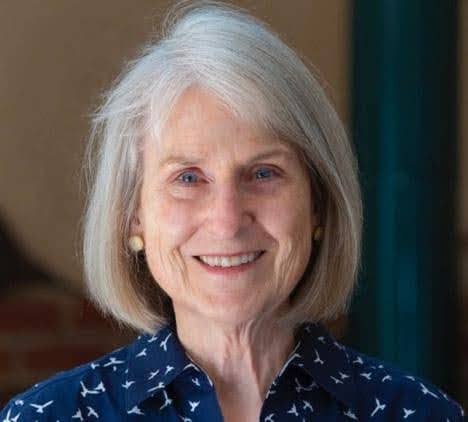
Kathleen Flake is Richard Lyman Bushman Professor in Mormon Studies Emerita, the University of Virginia. She taught courses in American religious history and in the interaction of American religion and law. Her primary research interests are in the adaptive strategies of American religions and First Amendment questions of church and state. She is the author of The Politics of Religious Identity: the Seating of Senator Reed Smoot, Mormon Apostle (University of North Carolina Press, 2004). She has held office in the American Academy of Religion, the American Society of Church History, and the Southeastern Commission for the Study of Religion. She received the Ph.D. from the University of Chicago in History of Christianity and the M.A. in Religious Studies from Catholic University of America.
Transcript
Kim Schultz: Welcome to Our Seven Neighbors Season five. We are so excited you're here with us this season. My name is Kim Schultz and I'm the director of Interreligious Engagement at Chicago Theological Seminary and producer of this podcast. Season five is titled Religion and Resistance in America, and it is hosted by Reza Aslan. Hi, Reza. Welcome back.
Reza Aslan: Thanks, Kim. Good to be back.
Kim: Good to have you. Episode seven. These conversations you've been having are so fascinating. We are digging deep. So many discoveries, and honestly, for me, surprises, and I'm sure for some of our listeners as well, lots of things that perhaps folks did not know about our own American religious history. Today, we are talking with Dr. Kathleen Flake, University of Virginia, and author of The Politics of American Religious Identity. So tell us, what's in store today? Tell us what you're thinking about.
Reza: In the 19th century, Latter-day Saints were not simply seen as another religious minority. They were treated as a threat to the republic. Their practice of plural marriage became a national crisis. Their church was disincorporated. Their property was seized. Their leaders were imprisoned. Their women were stripped of the vote, and their most sacred commitments were judged against the standard of Protestant Christian civilization. So today's guest, Dr. Kathleen Flake, has written what I think is the definitive account of one of the most important and least understood moments in this history. And that's the seeding of Senator Reed Smoot, who is a Mormon apostle, whose election to the US Senate triggered this four-year national trial of Mormonism itself. And what her work shows is that this was never only about polygamy or plural marriage as it's sometimes seen. It was really about power. It was about what minority religions must give up in order to be recognized as Americans.
So today we ask, when America promises religious freedom, does it protect religions on their own terms or only once they've been reshaped into something the majority can understand? Because Mormonism's long road into the American mainstream reveals one of the deepest tensions in our national history. The difference between tolerated, the difference between being tolerated and being transformed.
Kim: Super fascinating. Can't wait. Let's get into it.
Reza: Dr. Kathleen Flake, thank you so much for joining us on this season of Our Seven Neighbors.
Kathleen Flake: It's a pleasure to be here and to talk about a subject I think matters a great deal.
Reza: Yes. I'm very excited about this episode. You know, I'm fascinated by Mormonism as a religion, as a history. What I really love about this conversation is that it really does expose the limits of American religious freedom. I mean, the United States claims to protect religion, but I sometimes think it only does so if that religion looks enough like Protestantism, right? That if it's, if it, that religion can be seen as compatible with our dominant ideas of Christian civilization. And with Mormonism, it really becomes the great test case for what the Constitution does and does not protect when it comes to religion. And we see that from plural marriage. We see it in the Reed Smooth hearings. And we're gonna talk about that. The state doesn't simply tolerate or reject a particular religion. It wants to reshape it. It wants to redefine it. So that, I wanna follow that story with you, not just about Mormon history, but really the way that it serves as a window into how America decides who what religions are legitimate and which ones are not.
So let, let's go back to the very beginning. When our great founding fathers, people like John Adams or Thomas Jefferson, when they talked about the general principles of Christianity, what did that actually mean in practice, do you think?
Kathleen: In practice, like all people, they were limited by their imagination. They could not have imagined the number and kinds and diversity of religion that would come to this modern political state that they were creating. They were imagining a better version of what they had come from. And for some of them, that meant like John Locke, the great philosopher, that religion should be a voluntary association. The state should not require you to have a particular religion. And for others more politically minded, like Jefferson or Madison, they were trying to come up with a practical way, not necessarily for a, a state run volunteerism, but individual conscience was what drove them. Of course, there's not, you can put those two together very easily. But they all also thought that Christianity was the natural moral order. And what they feared was how Christianity was being run, not the contents of Christianity.
Though someone like Jefferson, of course, was very hostile to clergy and thought that eventually Unitarianism would become the American religion. So they had their prejudices about it, but it was largely about credilism, about for the more scientifically oriented the deists among them, it was certainly a practical morality. So they just, they. I guess I'm a little more sympathetic than you are to this problem. I don't think anyone intended to have the kind of battle over an implicitly state religion and religious diversity in America, but that's certainly what happened. They began something. They though they were ending a question, but from our point of view, they were just beginning the negotiation about what did it mean for a Democratic, a modern democratic nation state to host a variety of not just institutions, religions as institutions, but religions as different moral orders within the same republic.
Reza: Mm-hmm. Our first episode, we had a conversation with Peter Mansot about the idea of America being founded, not just as a Christian nation as we so often hear right now, but as the new Jerusalem. That this country was a kind of divinely created nation state. And obviously that notion has led to a great deal of conflict with religious minorities. And we've talked a lot about that in subsequent episodes. But there is something unique about Mormonism in that it is an American religion. It arises from this new Jerusalem land and that it very openly expresses itself as part of Christianity, part of this dominant religiosity that supposedly is inextricable from the founding of this nation. And I wonder if that in some ways explains the vitriol with which not just Americans, but the federal government itself often dealt with Mormonism. It's a vitriol that we don't see necessarily with the way that it deals with some other religious traditions, with the possible exception of Native American religious traditions.
Kathleen: No, it's true. The Latter-day Saints are a textbook case for just about anything you wanna talk about in America's constitutional protection of religion, right? Just about anything. We could start with we're shocked by the amount of violence that was expressed to us by the state and by their neighbors, right? We're just kind of non-plussed by why everybody was so upset. Even though, of course, polygamy became an enormous problem, but that was 30 years to come, right? This religion begins in upstate New York in the late 1820s with the production of a book that then becomes the nickname for it. It's more than a nickname. It's actually a slur. The Mormons, the Mormonites, that was a negative
Term. Mm-hmm. A reference to them having what the Christian, the Christians in this nation just though was Ultimate Heresy, a book that competed with the Bible. Although the Latter-day Saints themselves saw it as a second witness to what the Bible was witnessing to. So that was one reason why it just was, it was such a shock to a, what, to a Christianity that believed that the Bible created the moral order of the country. That if you were looking for something stable in all this upheaval that was the early Republic, it was the Bible. Like second base, if you kept your foot on the Bible, then everything was good. You could run home. But the Latter-day Saints say, "Hey, we've got another one. We believe in the Bible, but we also believe in this that was produced by Joseph Smith." So that, from the very beginning, they're founded in a difference that goes to the core, particularly of American Protestantism, because they had long separated themselves from the sacraments of Catholicism and the priesthood and all of that.
And they grounded their religion in the Bible. So it was what made Mormonism both ludicrous and a threat from the very beginning to their neighbors. What made them a threat to local governments was that they gathered people, unlike the Baptists, for example, that rose circuit. They would ride circuit through the wilderness and establish these small classes that then would have like home churches, basically, right? And the wilderness, but not the Latter Day Saints. Almost immediately within a year of their formal organization, they flee New York and moved to Ohio and began. They move into a township that settled, has some degree of settlement. And they gradually began to be the dominant force in that town because they gather all their converts to a single place. They don't make house churches, they make townships.
Reza: Right.
Kathleen: And so then they kind of burst the bounds, and we can talk about how, of Northern Ohio. And they end up in Missouri where all hell breaks loose. And you see not only voluntary violence, but state sponsored violence. Famously an ex-termination order. People argue about whether it was just about throwing them outside the state or killing them. It was probably both. If you couldn't remove them one way, you'd remove them the other. And it's a tragic tale. I don't mean to make light of it. It's a tragic tale. People were murdered. Women raped. Property was confiscated. In the dead of winter, these people had to walk with literally the shirt on their backs towards the Mississippi. And it just, it just beggars the imagination to think America could have done that. Now, having said that, the Missourians had their own reasons for what they did, right?
They too were threatened by the inundation of these large number of people that had a different order of being in the world. Some of it was jealousy about property because this was a communal society. They could aggregate both their labor and what wealth they had and assist in building up a township that was sophisticated in a very rough area, the frontier. Some people wanted that land and they kept moving around Missouri trying to find a place where they could live independently. Ultimately failed. Joseph Smith, the leader of the religion, is put before a firing squad. Cooler heads prevail, and he gets a trial. Well, they never actually gets a trial. They start a
Reza: Couple
Kathleen: Of trials. But anyway, the point is that you would think the religion would've died there. It was just like they were scattered. They were fleeing. Smith was in a dungeon in Missouri. But eventually they regather on the border of the Mississippi. They look for a place that this is where they start looking for a place that nobody wants. And they settle on this mosquito infested landing on the edge of the Mississippi River. And again, they build a town. And this town is bigger than Chicago. It becomes an enormous civic force there on the border. They have their own city charter where they have their own police. They have their own courts. And so you can see why, again, in a democratic state believing in the voluntary association of like-minded people who are easily moving among different denominations. And the denomination, the idea of the denomination itself is that you make no claim to state authority, no claim to civic authority, right?
And here's this egg in the soup, if you will, if not a fly in the soup of denominationalism. Mm-hmm. You have something that's this mixture of Catholicism and Protestantism. It has a priesthood. It's a lay priesthood, but it's an ordained lay priesthood. All of this is very confusing. They believe in revelation. They have another scripture. They believe in prophecy and have a prophet. So you can see why this is just w - how do you tame this? And what does taming mean? Right. And taming means, as you said, how can we make them look like us? Right. These are our neighbors and they don't look like us. They're too organized. They're too powerful. Remember, America's borderness aren't settled by then. This is when you have Sam Houston considering a, a, a republic of Texas. You've got the Mexicans in the West. This is not that stable an environment politically.
Yeah. So again, yes, Latter-day Saints were clearly persecuted, but there were some serious reasons for this conflict, though obviously it went, to put it mildly, to excess. It was a tragedy.
Reza: Yeah. Lots of reasons for it. And you talk about the many things that made the LDS community a threat to a lot of Americans. But one thing in particular <laugh> starts to stand out pretty quickly. And that is the issue of plural marriage, as you mentioned. Mm-hmm. In fact, one thing that I learned from you is that the Republican Party itself was founded partly in opposition to what it called quote, "The twin relics of barbarism." Yes. By which they meant slavery, obviously. Mm-hmm. And polygamy. Mm-hmm. And I think most Americans know the first half of that story, but almost none of them know about the second half. Could you just walk us through the federal campaign against plural marriage? And what I mean by that is not just the legal aspects of it, but the way in which plural marriage was, became the most obvious representation of the difference that the LDS community represented.
Kathleen: Well, for all their differences in LDS belief about modern revelation, additional scripture, all of those things, most Americans know you're not supposed to fight about what people have in their heads. Mm-hmm. They're, you're not supposed to fight with them about their ideas, particularly their religious ideas. That's one of the, the signature, if you will, ethical moral values in the United States that's, that underlies religious liberty. But the saints had practices. They didn't just think differently. They did things differently. And few things are as, again, fundamental in both one's personal life and in government is family formation, particularly in the 19th century. Family formation is significant. And marriage is undergoing enough changes on its own. This is where romantic marriage begins to peak in the Western world, where they go from patriarchal families, the kind of household government of Puritan family, to the two hearts that beat in one breast, right?
Mm-hmm. People who, whose emotional needs are met by this. And you also have the sense that there's a greater economic independence for the individuals in that, although that's certainly not completely true for women, but you have m - the market economy, right? That is
Reza: Suited
Kathleen: To the nuclear marriage. And so women's roles are changing. And all of this makes, ma - all of this makes polygamy look barbaric, meaning not us, not Western even, but barbaric, like slavery's barbaric. The Latter-day Saints themselves saw each of the marriages that comprised a plural marriage to be quite Victorian. And analyses of those marriages find it ironic how straight laced these multiple marriages were. While everybody else is comparing them to a Harim, or they would say Harem, the cartoon, you've seen the political cartoons with Brigham Young in a bed with umpteen women and they're all thinking about sexuality. The Latter-day Saints are thinking differently about these unions religiously. These unions are at the heart of how they understand salvation or exaltation in their terms, that the government of God is in the family, right? That reproduction itself has religious significance. It's not just for the satisfaction of the partners, right?
It has religious significance. So this sets it out for a real fight that it is the longest history of civil disobedience in the United States.
Reza: Yeah. It's such a tricky question, I think, obviously, because it's wrapped around so many questions about morality and about women's rights. And so it does. I think it is important to just pause for a moment when we talk about the anti-polygamy story. Because so often, as you kind of refer to, it treats women as victims awaiting rescue. And that is unquestionably how the anti-polygamy movement was expressed to the public, that this is about saving these women. But your work sort of complicates that story just a little bit. It doesn't necessarily romanticize the idea of plural marriage, but it does recognize that from the perspective of women themselves, especially those who defended it and practiced it and even sometimes found authority within it, the conversation isn't as clear cut as the state coming to the rescue of women, is it?
Kathleen: No, it's not that clear cut. But you can see how if you had scruples about oppressing a religion in a constitutionally religiously free society - <laugh>. That rescuing women would be - Sure. A good way to accomplish whatever your purpose - Absolutely. Other purposes might be, right? So there was much that made polygamy a convenient target. Not least that they were, yes, rescuing women who apparently did not want to be rescued, but they didn't. Because it was on the bodies of women, this was a class of people that really didn't have a voice, right? I mean, really didn't have a voice in Congress. When Congress is enacting all these statutes to rescue them, they have no voice. And when they rescue them in a way that, for example, the women have the vote in Utah before they actually practice the franchise before anybody else does. And the nation thinks they're gonna vote against polygamy, but they don't.
So the nation takes the vote away from them.
Reza: Right.
Kathleen: So,
Reza: Right.
Kathleen: So 54, 50 years before American women get the franchise, women in Utah are voting, but then it gets taken away. And what
Reza: If it's taken away?
Kathleen: Yeah. And they have this meeting where they yell back at Washington and say, "How dare you take our families apart?" Right? Now, that doesn't mean there weren't women oppressed in this system, right? That doesn't mean there weren't men who exploited this system of marriage. Big surprise. But what it does show is that there were a number of women who found meaning and purpose. And we can look at other records and say satisfaction in this kind of family construct. The nation, however, was not prepared for that kind of consent. They often called polygamy bigamy, but bigamy, the legal action of bigamy lies in fraud. You've defrauded the other woman. In this case, not only are the women expressing consent, but they're public witnesses to the union, et cetera, et cetera. All the rituals of marriage in terms of notice and public awareness, et cetera, are present in this marriage.
So they had to come up with. This is back to your original point. Latter-day saints are, are not only a test case, but they push American law. They push American law. Even though they des - it is a, it is civil disobedience, they are always going back to legal means to contest what the law is doing to them, right? So case after case after case. And they're forcing the nation to put in writing or articulate just what does this freedom of religion mean? And the nation responds, "If it means anything, it doesn't mean you." And it's because they practiced. They have these practices. And the nation though religion was between your ears, right? Because everybody agreed on what morality was. And then you had these various ideas about who God was and what was gonna happen to you after you died. But that really didn't matter.
What mattered was how you lived. And we knew we're all confident. We all understand general Christianity. Not credal Christianity, but in America we have this expression, especially in the 19th and the 18th century, general Christianity, which is its morality. And moral Christianity. Yeah. And so John Adams famously writes this statement describing to Jefferson who was in France and didn't get to observe how they created the First Amendment. He said, "We had this array of beautiful young men. We had Protestants, we had Catholics, we had Jews, we had horse Protestants and house Protestants, meaning the circuit writers and the standing churches, right? Think of New England. And we had Protestants who don't believe anything at all. And we were all there together, but we agreed on general Christianity. And that's what they thought they were protecting.
Reza: Yes.
Kathleen: But general Christianity was part of the Protestant imagination. And in a way you could say it was a gift. It was a gift to America in those early stages that you don't see now in states that are trying to modernize and trying to create constitutions. We, we had, again, for better or worse, and in this case, I'm suggesting in those formative moments when the United States was constitutionalizing, coming up with a shared document to govern itself. It could imagine religion between your ears.
Reza: Mm-hmm.
Kathleen: That they could have a religion that would be independent, that no law. I mean, think of that. Congress will make no law respecting religion. But Congress governs all kinds of human behavior, and so does religion. It was inevitable they were going to conflict.
Reza: Yeah.
Kathleen: And it didn't take long. You can see the wall of separation discussions about that and Washington talking to the Jews, assuring them that they're okay. But of course, the Mormons, because they, because the latter-day same religion is so much embodied, right? And this is where we can get to the bodies of women, how a lot of this regulation happened on the bodies of women, that Mormonism is such an embodied religion and such a structural and even lawmaking religion that it was inevitable that it would come up against this generalizable Protestantism. And so because it was largely a moral creed, not a theological creed, something like plural marriage was made for it. Now, of course, they also didn't like the Latter-day Saint communal economy because you also have the rise of free market, right? Free market industry during this period that is, if there's another sacred cow in this country besides religion, it's free market religion.
Yes. And so Mormonism also confront on, it just seems like on every level, they were like Velcro to attach every kind of difference you could attach yourself to in the American Republic.
Reza: No, you're so right. And that's such an interesting way of putting it because you're right. It does become this test case for how we understand religious freedom, how we define the free exercise clause, et cetera. And as we've already talked about, plural marriage becomes the most obvious version of that. Certainly the economic issues are there too. A little harder to sell to the public, I think. You know, it doesn't have the lurid quality that plural marriage does. But I do think that what's fascinating to me about this conversation is that this is more than just an attack on this one particular Mormon practice, a foundational practice, but it's one particular practice because the plural marriage was used by the federal government as an opportunity to disincorporate the church itself <laugh> to seize its assets, right? We talked about the disenfranchisement of voters. But we're talking about the imprisonment of thousands of Mormons and particularly in the name of protecting civilization.
And this is where the conversations start to get really interesting because - Right. It, it seems as though there is an attempt to protect Protestantization, uh, to protect what Adams refer to as general Christianity. That it's not just about punishing Mormons. It's about using Mormonism to define specifically what quote unquote Christian civilization means and what it will and will not tolerate. Could you talk a little bit about the role that the Supreme Court starts to play in this conversation as it actually literally upholds this entire process of disincorporation of the, of the LDS community?
Kathleen: Mm-hmm. Well, you see this transition from popular violence, right, in the East, to state regulation even in Kirtland. In fact, speaking of Supreme Court cases, one of the cases that no longer has the power it used to, the Peyote case, most people know the Peyote case, where the court decided that as long as the statute was neutral on its face and governed everybody, you didn't have to protect religion. They just got swept up in it. Now you could if you wanted, but if you as a state legislature regulated this drug that, and it applied to a religion accidentally, not intentionally, then that was okay. The Latter-day Saints even represent that in Kirtland because the banking statutes worked against their church need to have communal property, right? A kind of collective association of their wealth that the state statute didn't allow. And that's part of what drove them out of Ohio is that neutral on its face statute.
So even as early as the 1830s, you see these, you see this kind of foreshadowing of what's going to happen in the future of Constitutional law, but certainly by the time they get to Utah. And again, in fairness, let's recognize that you have a, a theocratic organization that is standing between Washington and the goldfields, right? They're trying to bring America together and they have what they see as a hostile power that it, it might as well be Spain again sitting out there, right? So they throw everything they have at it. So yes, it is religious, but it's also a power struggle about what we might today call secular things, but which it, to Mormonism, are made sacred. How you marry, what you do with your money, how you build your businesses, that kind of almost communistic communalism that inhabits all their lives. So yes, they are at the end of a very big stick, and I don't wanna minimize the chaos and the personal crisis it created, but when the federal government begins to deal with the Latter-day Saints out there in the Rocky Mountains, once the Civil War is over, where they had stationed troops throughout the Civil War to keep an eye on them, right, they begin to legislate.
And so they legislate on this moral issue of polygamy and they believe the grounds for it. The Supreme Court in, it's still good law. It's Reynolds, all right? The Reynolds case is still cited in religious freedom cases today as standing for the proposition that you can't let everybody have their own law. You make the state a nullity if we could all come up with our own laws. And so we have to regulate. You get Reynolds and then you get, as you say in 1890, my favorite court title, the late Church of Jesus Christ of Latter Day Saint, the dead church of Jesus Christ of Latter Day Saints versus the United States where they come in and say, "Yes, you can confiscate church property." And so the sheriff picks up the phone, he calls the president of the Church of Jesus Christ of Latter-day Saints, and he says, "We're coming for your temples." And then the game is up.
You know, that's the move on the chessboard because if you take the temples away, you can't do Latter-day Saint marriages.
Reza: No. No. It's a transformational moment, really, 1890. And we obviously talk about the 1890 manifesto. It's often remembered as the moment that the LDS Church gave up polygamy. But there's something so much deeper in this moment because it really is a moment in which the federal government is saying, "If you want the religious freedoms that are guaranteed to you in our founding documents, then you have to be like us. You have to become more like what we feel Christianity is supposed to be." This is what we were talking about. You have, you have to become more Protestant, if you will. That protection itself will require Protestantization. It's almost like the, it's the price for being accepted, the price for inclusion. What does the 1890 manifesto do to the LDS faith itself? This acceptance of this requirement. You must change a foundational creed, a foundational heart of your religious identity if you want to be part of this country.
Kathleen: It's, it's an enormous crisis. Polygamy is based on a revelation to a prophet. If you unwind one revelation, then you can unwind the rest. So this strikes at the heart of the religion. But let me say also, not that I'm arguing for what they did, but that is, that's what modern nation states have to do, right? They have to make people have a sense of we are us, and they are legislating from a sense of common morality. Now, the United States stands for individualism and freedom, so we like to think that we don't require this of people, but we do all the time. All of us have to conform to laws in a particular way. Uh, and again, I'm not justifying this law necessarily, especially knowing where we were going to go in the nature of marriage and sexual freedoms, right? It seems quaint and certainly racist given the basis for the opinion that they decided what they did.
But it's. I also want to not forget that it's not just a clean victim and victimizer here. This is a negotiation with what we would call today asymmetrical power, right?
Reza: Yeah.
Kathleen: The nation has an army. The nation can enforce its decisions. But the Latter-day Saints were not without their resources. Otherwise, we wouldn't be talking about them today. You don't know anything about the Mogultonians because they disappeared, right? But the Latter-day Saints are still here, and they're still causing religious liberty questions. So, so they had their resources. But back to your question, it was an enormous struggle for them as a religion, as a people, individually and collectively, to accommodate this political change. And even though, and this is widely discussed, the manifesto of 1890 that says, "We won't practice polygamy," didn't really say we won't practice polygamy. It was a press release that said, "I, the president of the church, will recommend to my people that they don't practice polygamy." And so the government continued to turn the screw and turn the screw and turn the screw until finally they said, "Okay, we won't practice polygamy, but we're not going to abandon the marriages we have.
We're not going to tell those people they have to separate," which is what the government wanted. This was the cohabitation issue that you were now sup - as the husband and the father was to choose one wife and go live a monogamous marriage. And nobody really talked about what was to happen to the rest of the family. So the officials in the church said, "This we will not do." And so for the next generation, until i- imagine at a pipeline, until those marriages were most of the way through the system, they continued to practice polygamy.
Reza: I think sometimes these conversations get stuck on plural marriage, but it is a very important touchstone in understanding not just the history of Mormonism, obviously, but this relationship between state and church and the coercive practices that so often the state undergoes in order to transform religious identity in the US. But I, I don't wanna make it sound like this was the only, uh, aspect, that this was the sort of the core of the American response to Mormonism. And you certainly don't do that in your book. In fact, I love when you were talking about the 18 manifesto as kind of the beginning of this argument, not the end, because one of the things that you talk about in the book is that the true turning point when we wanna talk about the forced accommodation of the LDS church to American ideals is actually the Reed Smoot hearings.
Can you talk us through that entire spectacle? <laugh> Uh, and help us explain how those hearings, Reed Smoot, for people who don't know, is a Mormon apostle. He's the first Mormon apostle, right? I think to be elected to the Senate.
Kathleen: First and only. Uh,
Reza: First and only, that's right. Oh. To be elected to the Senate. And it really becomes this sort of historical drama when it comes to how we define religious freedoms and religious tolerance in this country. Can you talk to us a little bit about this?
Kathleen: Yeah, this hearing was like Watergate in terms of its, the public storm it created. And it went on and off around election cycles because it was a useful forum to run and ma - for and maintain an office for four years. And it subpoenaed virtually all the leaders of the Church of Jesus Christ of Latter Day Saints and brought them back to Washington, which they called the seed of war in their private correspondence to put them under oath and to testify because polygamy was still going on. And it's 1904, dang it, and it's the progressive era. So why are we still. And again, it's not just polygamy, as you say.
Reza: Yes.
Kathleen: Eventually, they're going to ask the church to demonstrate the three things. Do they obey the law? Are they tolerant? Do they allow for political disagreement? Can we see democracy in Utah? And are they loyal to the nation? They're gonna come up with those three tests. And so it's not. But polygamy is intimately associated with a lot of those touchstones. So is their economic system. So is their religious leadership system as it relates to public office in Utah. All that's going on in this hearing. Eventually, church is able to satisfy the Congress on practical grounds, and it's. But let me say something first. The thing I learned from this book is that coercion doesn't work against religion. The nation had thrown every kind of police power it had. The army, the federal marshals, just, you just name it. They'd thrown everything they had at this church.
And the Latter-day Saints successfully resisted. Now, there were a lot of reasons why they had territory. They had size and numbers. They were white, right? They were white Americans, as you started this interview with. One of the reasons Mormonism is such a crisis for this nation is they can't blame it on their European roots like they did with Catholics.
Reza: Mm-hmm.
Kathleen: And they couldn't blame it on their skin color like they did with indigenous peoples. And they. Here were New Englanders with co - with converts from around the nation, and then eventually converts from the British Isles and Sweden. So it really, it was, it had a unique sign function, you could say, in the nation in terms of religious diversity. There was really no way to hide from the fact that this was an American religion doing un-American things. They finally figured out what to do, which was horse trade, basically. They compromised. Both sides compromised. But as they said, when they debated the finding of the hearing, when, on the Senate floor, when they had the debate, there was a senator who stood out and said, "We must be practical men about this. And know the limits of what we can do and accept what they have done here."
Reza: I think that's why I'm so fascinated by this history, because if Mormonism becomes acceptable, but only after it changes its marriage system, its political structure, its very public identity - uh-huh. Then it really brings up these fascinating questions about the difference between religious freedom and religious accommodation. And so let, let's talk about that for a moment. Not necessarily about Mormonism per se. But the way in which the experience of Mormonism a- and Mormons in America gives us a deeper understanding of what religious freedom actually means in America. I mean, is religious freedom only freedom if it's, if that religion is legible to the majority religion? What does it mean?
Kathleen: There's no law that has. How to say this? This comes back from. This has to do with my law background. No law is, we would say positive, right? Has positive force. And I don't mean that morally. I mean in terms of it's self-executing. No law is, is ever completely done in a society like ours. It's always subject to change in interpretation. And so we can see this in the Supreme Court almost too clearly. The sausage, the. What makes up the sausage has almost become too clear in this latest court, how political the sausage is, right? Because it's just been too quick a turnaround. We've gone 180 degrees and about a generation on First Amendment law. And when you do that, you reveal that none of these laws are free from interpretation. And then the question becomes, who does the interpreting?
Reza: A moment ago, you mentioned the extraordinary trajectory that the LDS church has had in the United States. And we're talking about a religion that was once treated as a threat to the very existence of the Republic. And today it's as embedded in the American religious fabric as any other religious tradition. Mm-hmm. I mean, you just gotta think about the arc from Reed's mood to Mitt Romney is in and of itself an extraordinary expression about the survival of the LDS community and, and about the religious pluralism in America. And then now at the same time today, there are a lot of forces in the same conservative movement -
Kathleen: Christian nationalism.
Reza: Right. Are expressing a muscular form of Christian nationalism that, listen, not that long ago very clearly excluded Mormons from that idea of, let's go back to Adams' term, generalized Christianity.
Kathleen: I think it is curious that studies show that so many individuality saints express Christian nationalist preferences in the present political debate, especially since that movement doesn't really want them to join. <laugh> There's still that antagonism. So there's that curiosity. And meanwhile, the church itself is not part of that movement. The church itself is very much saying implicitly, although it doesn't want to alienate portions of its membership, is expressing, trying to redirect that energy. Let me say that. It helps to recognize that there are different kinds of Christian nationalism. And one is a kind of providential Christian nationalism that said, "Oh, God bless this country. We got this kind of constitution and God is still with us." That is certainly Latter-day Saints, that they think that, uh. Well, if you're talking to Joseph Smith, he would say the Western Hemisphere in North America, right? But for many American Latter-day Saints and can read the Book of Mormon to say, "America has a special purpose in the world." But that's a kind of theological Christian nationalism.
There's a kind of civic nationalism that says, "Oh, we all need to carry our own weight and be productive members. We need to serve the state in a particular way with our religion." And then there's the Christian nationalism and it says, "We need to be in control." Now, all of these can, as we say, go south. Even the theological nationalism can go south, can turn into issues of who's in control and who gets to say what's good and what's bad. But I would say I too am non-plus by Latter-day Saints who want to join the Evangelical Christian Nationals Movement because I think one of the first heads on the chopping block, if not the. I mean, maybe the first, I exaggerate, but they would certainly at some point take aim at these people who want to join them.
Reza: Dr. Kathleen Flake, thank you so much for this conversation. It was absolutely enlightening and fascinating, and we're so grateful to have you as part of this program. Thank you for joining us.
Kathleen: Thank you very much. I've enjoyed it. I've learned a lot myself as we've had this discussion, and I thank you for hosting it.
Kim: And that does it. Another episode of Our Seven Neighbors Season five. Special thanks to Dr. Kathleen Flake for being our guest this week. More about Dr. Flake and all of our guests can always be found at our7neighbors.com. Check it out. Thanks for joining us and tune in again next week for another episode, this time featuring a conversation with Reza and Dr. Lee Eric Schmidt, discussing atheism and secularism in America. It promises to be a great conversation. Special thanks to our host, Reza Aslan, for leading these conversations every week, and also to Hazel Gomez, our podcast researcher. We're so grateful for you, Hazel. Learn more about CTS at ctschicago.edu. Until then, take care and take care of each other. See you next time.
Straight White American Jesus
The flagship show examining Christian nationalism and democracy.
Listen Now
Axis Mundi Daily Brief
Short, focused analyses of the most important daily developments in religion and politics.
Listen Now