Freedom FROM Religion: The Right Not to Believe in a Nation of Faith
Summary
Under the backdrop of our nation’s 250th anniversary, Our Seven Neighbors, season 5, explores the long, contested history of religious diversity in the United States—not as a feel-good celebration of pluralism, but as a hard-won achievement forged through conflict, exclusion, resistance, and moral struggle. Episode 8 features host Reza Aslan in conversation with Dr. Leigh Eric Schmidt.
Meet The Guest
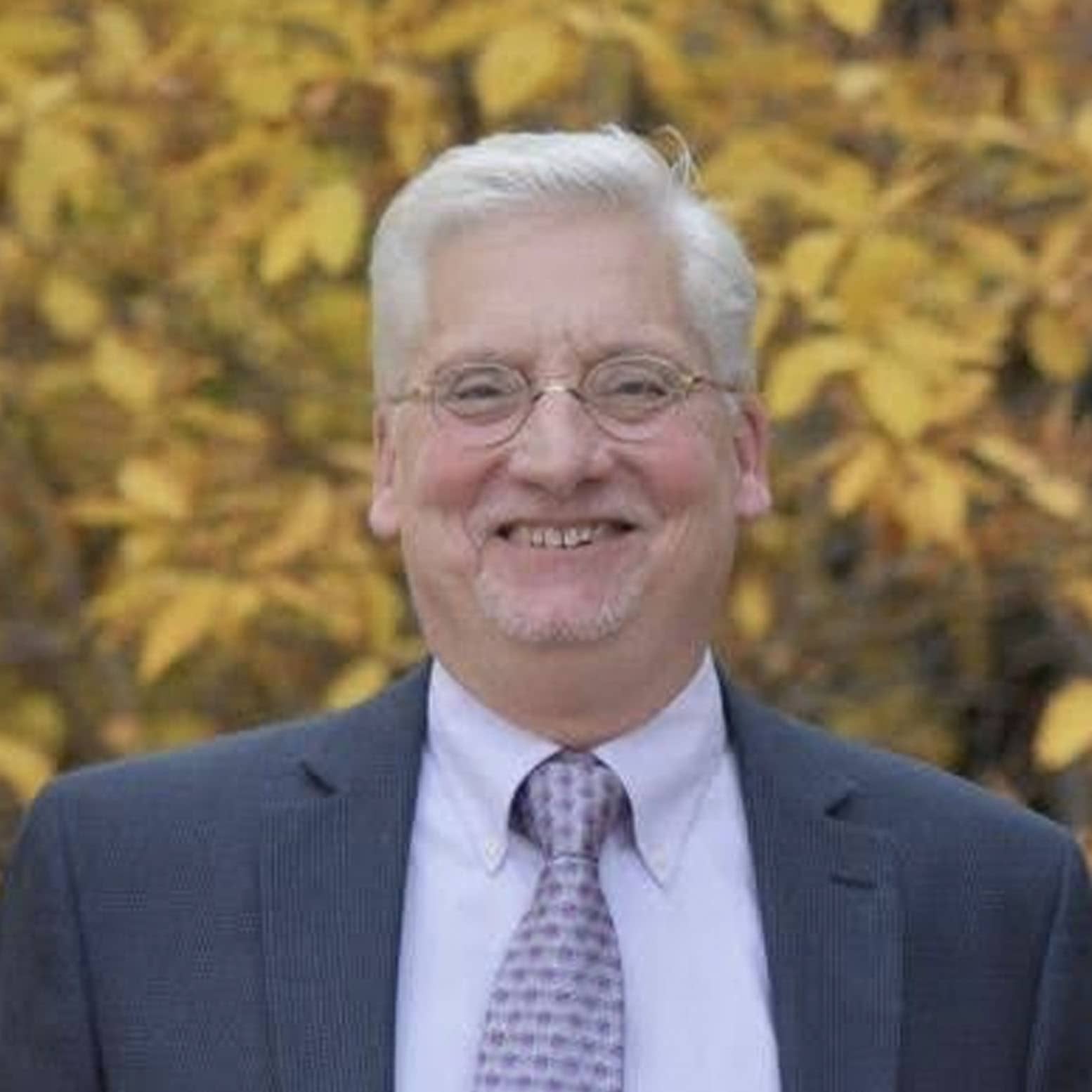
Leigh Eric Schmidt
Leigh Eric Schmidt is the Edward C. Mallinckrodt Distinguished University Professor in the Humanities at Washington University in St. Louis. The author of several books on American religion and culture, he has concentrated in recent years on the history of humanism, secularism, and American unbelief: Village Atheists: How America’s Unbelievers Made Their Way in a Godly Nation (2016) examines how atheists and freethinkers have fared in American public life and The Church of Saint Thomas Paine: A Religious History of American Secularism (2021) explores the ritualistic, community-building, and saint-making dimensions of American secularist bodies. He edged his way into this domain through his work on the American dissident and free-speech martyr Ida Craddock in Heaven’s Bride: The Unprintable Life of Ida C. Craddock, American Mystic, Scholar, Sexologist, Martyr, and Madwoman (2010).
Transcript
Kim Schultz: Welcome to Our Seven Neighbors season five. We are so excited you are here with us. My name is Kim Schultz, and I'm the director of Interreligious Engagement at CTS and producer of this podcast. Season five is titled Religion and Resistance in America, hosted by Reza Aslan. Hi, Reza. Welcome back.
Reza Aslan: Thanks, Kim.
Kim: Boy, we are closing in on this season, aren't we? This is our eighth episode.
Reza: Yeah, turns out we have more than seven neighbors.
Kim: Yes, indeed. In fact, we do have more than seven, and this is our eighth neighbor. And today we are expanding the conversation a bit, I'd say. We are talking atheism and more broadly secularism as it related and relates to the story of being an American.
Reza: Yes. As listeners to this season know, we like to tell a reassuring story about America, that this is a nation founded on religious liberty that from the very beginning, the First Amendment ensured that people were free to believe according to their own conscience. But as you know, this podcast takes a little bit of a different view of American history because even embedded in that first amendment, especially in the establishment clause, is a far more radical idea, not just the freedom to practice religion, but the freedom to be free from religion. And that second freedom has always been a little harder for Americans to accept. In fact, for much of our history, those who rejected religion weren't just seen as different. They were seen as untrustworthy, as immoral, even dangerous to the fabric of society. So today's guest, Lee Eric Schmidt, traces that hidden history. In his book, Village Atheist, he tells the story of ordinary Americans who chose not to believe and who then paid the price for it, socially, legally, sometimes personally.
And in doing so, they forced the country to confront a difficult question, one that we're still working on. Does freedom of conscience really include the right not to believe, or is belief of some kind still the price of belonging in America? Because the true test of pluralism isn't how we handle differences in belief. It's how we treat those who reject belief altogether.
Kim: Great questions. I'm looking very forward to this conversation, Reza. Shall we get into it?
Reza: Yeah, let's do it.
Kim: All right.
Reza: Lee Eric Schmidt, thank you so much for joining us on this season of our Seven Neighbors. This is a conversation that I've been really excited to have because when you talk about the history of belief in America, there is this central contradiction, which is that the nation that enshrined religious liberty, including implicitly freedom from religion, hasn't ever really fully accepted those who choose not to believe that the struggle of atheists and secularists and free thinkers and materialists to me shows that pluralism has always been a contested idea, not just across religions, which we've talked a lot about in this season, but around whether religion itself is required for moral citizenship so that when America promises in its founding documents, freedom of conscience, does it really mean a freedom that includes the right not to believe? And if not, what does that actually reveal about who counts as a full citizen?
So this conversation, I think, is going to be hugely important for us. And I want to start at the beginning, which is where a lot of these conversations begin. I've been thinking about the establishment clause, right? That embedded in the establishment clause is something more radical, which is not just the freedom to practice religion, but the freedom to be free from it. But as we discussed, that second part never really sat all that comfortably in American life or most of our history rejecting religion didn't just make you different. It made you suspect. It made you morally unreliable. It made you dangerous. So let's start by tracing that tension about how a country that constitutionally protects freedom of conscience has often and still does resist those who take that freedom all the way to the place of unbelief. So let's start here. Sure. You know, as well as I do, that there's this surge of conversations now, particularly in right-wing politics about that America was established as a Christian nation.
And most of us just kind of chalk that up to propaganda and politics. But you, in your work, actually talk about this idea as being deeply a part of the actual American founding. So talk about that a little bit, about this idea of the notion of Christian nation being there, the way that some of these ideologues actually like to fantasize about it. Maybe it's not as much of a fantasy as we all think it is, is what I'm trying to say.
Leigh Eric Schmidt: Right, right. The idea of Christianity's fundamental importance to the country is certainly deep seated, and this is a really formative debate about whether within that heavily Christian context, there should be toleration for people who don't believe. And I mean, one can see that in early, very important documents like Locke's Letter on Toleration, which was 1689, has a lot of influence on Jefferson and Madison and other thinkers about religious liberty at the founding. I mean, there he's saying he can imagine a polity that will work that is very diverse, Protestants of all kinds of varieties, Jews, Muslims, but the sticking point for him is atheists. Though that's a group that he just doesn't think the polity can stand. He thinks that atheists are inherently untrustworthy, that their promises won't be kept.
You can't count on their word, you can't count on their oath. There are these wild beasts who are just dangerous to society as he sees it. And that view persists. And I think that Jefferson is one of the first to really challenge it in a deep ways with the Virginia Statute on religious freedom in 1786, where as he interprets it, that religious freedom, sure, it extends to Protestants, Catholics, Jews, Muslims, Hindus, but he also says it extends to infidels of all denominations. Now, that view does influence some other people over time and gains a little more mainstream traction by the middle of the 20th century. But a lot of people think that that's just an example of how crazy Jefferson is, what a wild eyed atheist he is and how dangerous he is that he would say that infidels, this freedom to be irreligious is also part of how we think about religious freedom.
Yeah, I don't think that is the prevailing argument at the founding. I mean, people really, I think that extension is notable on Jefferson's part, but it's also just so deeply controversial because most Americans are still thinking that Christianity is integral to moral order and public peace and so on. So yeah, I mean it's-
Reza: I was going to say, and in fact, it's not just that most Americans think that it's that they look at the Constitution and they see it's lack of explicit Christian establishment as a flaw to be corrected, as a thing to be corrected.That's
Leigh: Absolutely right.
Reza: So the question is then, how do secularists, and let's stop and just recognize that some of these labels, it's hard to talk about atheism or secularism or agnosticism when you're talking about the 17th century, the 18th century, those labels might be a little bit more fluid than we think that they are, but let's just use them because people know what we mean. How did the early secularists, as far as we know, how do they push back against that idea, this notion of these laws must be predicated on Christian morals for them to have any kind of real standing in our society?
Leigh: Right. Well, it's a long struggle and they push back by building organizations dedicated to civil liberties and you begin to see some organizations small, like an infidel association in Philadelphia or Boston before the Civil War. And then it's after the Civil War, you get national organizations like the National Liberal League and the American Secular Union that are dedicated to pressing for a stricter secularist interpretation of the Constitution. And they dwell on all of these different church state issues as being crucial and they start pushing for it and they don't let go of it really. They're tenacious on this point. And many of the plaintiffs by the middle of the 20th century who are more successful, like say, you don't have to believe in God to hold an office of public trust or you can't have these Christian dominated forms of religious instruction in the public schools.
Those people are direct heirs of those late 19th century liberals and secularists who are pressing this point. So I think that's one way. I mean, they're also making the kinds of arguments that would be familiar to us, the emphasis on the godlessness of the Constitution, the emphasis of the Constitution already makes prohibition around religious tests for public office. They have a very wide view of religious freedom from the First Amendment and what it means to not have an establishment of religion. So they're making their arguments and making their cases in ways that I think we would see as quite familiar. And they do really get traction in a series of Supreme Court cases after World War II where they start winning some cases. They actually start winning cases. And before that, they were just seen as gadflies and irritants. What crazy person thinks that there should be a free thinking champlain or a humanist chaplain in the military just because there are all these Christian chaplains.
Nobody's really going to do that or the issues around religion in the public schools. Yeah, you might not want the Bible read in the public schools, but what crazy person would go along with that read officially by school teachers devotionally in the classroom. But eventually they're less seen as crazy gadflies and more seen as making a substantial constitutional
Reza: Argument
Leigh: And that takes time, but they're inching along toward that. Their curiosities in the 1920s, but by the 1950s, they really have to be taken seriously their arguments.
Reza: Yeah. I want to get to that because there's some very interesting legal challenges that come up that have a profound impact on the way we even think about our First Amendment rights. Just sticking with the paths for just a minute, you're an academic, I'm an academic, we have no choice but to define terms. It's what we do. So let's actually define this term secularist in so far as it applies to the early history of this country. I mean, when someone calls themselves a secularist, whether they actually did call themselves that or not, were they making a theological argument? Were they making a philosophical argument? Were they making a sociopolitical argument? What were they saying about themselves?
Leigh: Right, right. So I think they're making all of those arguments. The term secularist comes in, this is going to sound very academic to be specific in this way. It was actually coined in the 1850s in British free thinking circles, and it's initially seen as a way of softening unbelievers image.
The unbelievers are so disreputable, and maybe we stop letting them call us atheists and we start calling ourselves secularists, we'll get treated better in public life. So it's used that way. But the substance of it really is, I think, especially in the US after the Civil War, the people who are saying that are saying it for sociopolitical reasons or legal for this kind of traction they hope they can get in these legal arguments, but they're also making theological and philosophical arguments. Those just are usually part and parcel of it. The secularist is making a claim that you should really focus on this world alone as a domain of happiness. Don't think about a world beyond this world. Don't think about heaven and hell. You really need to focus on the happiness one can have in this life. So that's a theological argument, philosophical argument. They're also, like every Christians too, I mean, they're just puzzled by questions around the existence of evil, the odyssey questions, and they just don't think Christians have a good answer to that.
They just think there's too much evil in the world and Christians aren't facing up to the implications of that for the existence of God. So they'll make that argument. Again, it's a theological argument. They're also just really, really obsessed with the authority of the Bible and scripture. So again, they're making religious arguments. They just think the Bible doesn't have the religious authority Christians are claiming for it, and they make that argument in all kinds of ways, but they really are deeply committed to undermining biblical authority. So I'd say as all those things are going on, one secularist might emphasize one side of it more than another, but it is sort of part of their credo, if you will.
Reza: Yeah. I mentioned this earlier, but running through all of this is this deeper anxiety from the American public, that this isn't just about belief or unbelief, it's about morality, right? That atheists have historically been viewed as morally suspect, as people who can't be trusted to tell the truth or to uphold commitments or really even to participate fully in civic life. Now, before I ask you this question, let's just lay some facts out just for a moment because I think this is still a predominant view. The data is explicit, undeniable, whether we're talking about crime rates, whether we're talking about social trust measures, whether we're talking about broader indicators of ethical behavior, not only is there never any evidence that non-believers are "less moral." On the contrary, we consistently see the opposite. We consistently see those who call themselves atheists or secularists or non-believers consistently show higher levels of moral indicators and ethical behavior in study after study, whether it's the Pew Forum on religion and life, or whether it's the Gallup polls, then Christians, then Jews, then Muslims.
So we don't need to pedal this nonsense, and yet it is so deeply embedded in the perception of Americans. Why do you think that ... Is it just simply this belief that, well, if you don't believe in God, then certainly anything goes. You have an idea of anything goes, which to me, frankly, says more about the person making that comment than about the person being described, but I'll let you answer this question.
Leigh: I mean, it is a puzzle how that critique of non-believers, atheists, how that is so durable, it's there from the beginning. I mean, it's always, if you're marking someone as an atheist or a non-believer or an infidel, you're saying they're an immoral person. There is a strong association between infidelity as a form of non-belief and infidelity as sexual license. I mean, that association is just deep. Somehow, if you're a non-believer, you aren't committed to the marital and sexual mores that most Americans are or something, or the Christian norms of monogamy or something and family life. So that's there. And so there is this kind of historical weight to it. Secularist free thinkers are really good in the way you laid out of presenting the contrary evidence, of collecting all the evidence that shows that Christianser just is prone, if not more prone to criminality as any ethical humanist or agnostic or atheist.
So you get it out there, but that assumption is just deep seated that the non-believer in scoffing at scriptures or blaspheming God is subverting the immoral order across the board. And it's pretty unshakable.
Leigh: Mean, as a proposition, you can keep advancing the counterevidence and the statistics, but that association, I mean, you see it in the polling data where people ask, would you trust an atheist to hold to run for elected office? They're on the lowest of the low in that, right?
Reza: I will never forget. Immediately after nine eleven, there was a poll, a similar question like this, and more Americans at a time of profound Islamophobia, more Americans said they would rather, they would hold their nose, but they would rather vote a Muslim as president than an atheist as president. This is in the months
Leigh: After
Reza: The attacks of 9/11.
Leigh: Yeah, absolutely. I mean, that's the thing you see or the same kind of the polling around if your child brought home someone who as a prospective mate, who would you be most alarmed by? And it's going to be the atheist. And they could imagine a new son-in-law or daughter-in-law of all different kinds, but the hardest one they had imagining was that, oh my gosh, my son or daughter brought home an atheist. So that polling, it's tenacious. Maybe it's lightening up a little bit now. I mean, as we get a higher percentage of people who don't go to church and are nothing in particular, there's just a little more of a cohort there for solidarity. And so there may be some improvement on the horizon on those things, but it's a critique that atheists and non-believers have faced from the founding of the country right up to the 21st century.
So it's not going to completely go away, that's for sure.
Reza: Again, as I kind of mentioned this in the question a little bit, to me, if you're a believer who believes that the only thing keeping you from acting on your worst moral impulses is your fear of punishment and your hope for reward, then you're a child hoping for a lollipop. And the idea that you can't imagine anyone else would just be a good person without there being some reward at the end of it, without getting the lollipop, at the end of it says far more about you and your religion than it says about anyone or anything else. We laugh about this because it's easier to laugh about, but there are, let's face it, some very real world consequences people to this day, I mean, certainly much earlier in our history, but to this day, disbelief can mean losing your business. It can mean losing neighbors, certainly reputation.
Some cases, it could lead to legal, physical, even violent retributions. And that certainly has been the case throughout American history. Can you talk about some of these figures that you've studied and written about? I think about like Charles Reynolds, I think about Elma Drake Slenker. Talk about who they were, the risks that they face when they're in publicly challenging religious authority in this country.
Leigh: Now, yeah, there is a certain amount of danger of going out there on this limb, that's for sure. And there's a certain amount of vigilante violence that is in the air. That's true. For example, that Charles B. Reynolds case is blasphemy case. I put that in quotation marks in New Jersey in the 1880s where this evangelist for unbelief is holding a tent meeting of just imitating the Protestants and having a tent meeting. And it's one thing for Christians to accept the fact that maybe they have to let these non-believers, these atheists have their meetings indoors. We're not going to be heard, but he's holding these tent meetings out there in public where people can hear it and it raises real distress in the town and a mob collects, destroys the tent. And the legal system has no interest at all in the mob or the protection of his property.
They instead decide that he's the one who's the disturber of public peace and he should be indicted for blasphemy and he is and he's ultimately convicted. It ends up being a token fine. He doesn't spend much time in jail, but some free thinkers of the period did. That would be especially the case if they get conflated with obscenity or these kind of sexual reform movements. If they get their irreligious opinions connected to obscenity, they can spend a lot longer in jail. Sarah Chase is someone who is working a lot on marriage reform in New York, is also a non-believer. And as her chief persecutor is Anthony Comstock, who's a moral crusader at the end of the 19th century. And in his ledger where he's noting who he's arresting, he puts her down as an infidel and an abortionist. And ultimately, it's her work for reproductive freedom and a malpractice case that's brought against her that gets her locked up for nine years.
But in Comstock's mind, her infidelity and her sex reform work are all of the peace. Blasphemy and obscenity just go together. So yeah, there are real risks out there. And so yeah, I think that's true. I mean, there's also, when you see it, I think in a much later period, "Oh, that's the 19th century." But in the middle of the 20th century, those plaintiffs who are atheists, secularists, ethical humanists who bring those cases against prayer in the Bible, prayer in the public schools or Bible reading the public schools or release time programs in the public schools, they are reviled locally. The case, Lawrence Roth, who's one of the plaintiffs in the school prayer case in New York has a cross burned in his driveway. He's a Jewish atheist. No one tries to arrest the people who burn the cross, right? I mean, that's just like, "Oh, I don't know, kids being kids or something.
I don't know what the excuse is, but nobody goes after that. " And so there is, yeah, that's an edge of vigilante violence that lurks around the edges that has to be taken really serious. And what is fascinating is how rarely the authorities are particularly concerned about free thinkers and atheists being intimidated in those ways.
Reza: And yet it really is the 20th century, like you said, where these individuals, these groups begin to actively come together, actively fight back, particularly when it comes to these blasphemy and obscenity laws, these trials. And I think what probably a lot of people ... You mentioned this yourself, that there's not a lot of love or support for those plaintiffs. And you hear this all the time. So there's 10 commandments in the classroom. What do you care? Don't look at ... So they pray before the football game. Just don't pray. What's your problem? This is the constant reframe. But what we
Don't understand is how foundational, how earth shatteringly important those challenges were, not to issues of religion or freedom from it, but to defining what free speech actually means, right? That these trials weren't just about trials like what was at stake wasn't the 10 commandments or prayer that, okay, you can talk about that as preference or whatever. What was at stake is let's define truly what it means to say we have free speech. And so talk about that. Talk about how those things, very unpopular, led to really the world that we live now, where we're still negotiating these issues, but certainly not to the way that we were in the first couple of hundred years of our nation's history.
Leigh: Right. These figures really are pioneers in the free speech fights. The early civil liberties groups, the ones that lead to the founding of the American Civil Liberties Union are rooted in these struggles over free thought, blasphemy, and obscenity at the end of the 19th and early 20th century. The Free Speech League comes right out of those circles, which is the direct forerunner of the ACLU. And so yeah, they're fighting over all of these constraints that they see being imposed on their speech and also their publishing. I mean, there's a bookseller in Chicago in the 1890s, he's a publisher and he's known as leading an agnostic publishing house. Well, they go after him and drive him out of business, again, because they see him as not only publishing things agnostic, but also obscene in some way. So yeah, so publishing ventures, free speech ventures, all of these things are really being fought out by these kinds of figures because their form of speech and their form of publishing are seen as so threatening.
I mean, there are other groups that are important in these battles too, Jehovah's Witnesses and so on. So it's not just free thinkers and non-believers, but they really are an axial group for raising these issues and putting them out there. I mean, there's this atheist in the 1920s. I mean, he gets arrested in Arkansas because he decides he's going to save Arkansas from God and anti-evolution. But even in New York when he's speaking, he speaks outdoors, he gives his atheistic talks outside, and there'll be a group of people talking, right? And he's the one that gets arrested because he doesn't have a license, neither does the other guy speaking on the street. But they're like, "You're the one that's really the danger." It's your speech that's so particularly dangerous to public peace and public morality. So you're the one we're going to take in. So yeah, I see these kinds of figures, free thinkers, non-believers, atheists as really important in those larger debates about free speech and freedom of the press and so on.
I mean, yeah, I would say they're at the center. I mean, the free speech movement isn't directly linked to these Manhattan secularists and liberals who- 100%.
Reza: That's right.
Leigh: Yeah. Who are putting together the Free Speech League. That's not that they aren't interested in other forms of free speech, but what provokes them are these cases where they see free thinkers and sex reformers being silenced.
Reza: That's right.
Leigh: Or worse or worse, actually. I mean, worse, not just silence, but sometimes thrown in jail or driven to suicide or whatever by the harassment.
Reza: We're living in a world that was largely constructed on those efforts. And look, it's a very contradictory time which we are living for a whole host of reasons, obviously, but with the conversation that we're having, I mean, one can assume that the story of secularism in America, very hard fought freedom from religion, something that should And have to be fought for since it's actually embedded in the Constitution, but whatever. At least we're moving in the right direction. We talked a little bit about demographics. Those are sometimes hard to pin down, but roughly a quarter of Americans now identify themselves as so- called nons, religiously unaffiliated that runs the gamut, obviously. And we could even make an argument that some of the stigma that secularist atheists, free thinkers have had in our nation's history has begun to somewhat go away, not completely, but it's still there.
So the idea of electing, I mean, we'll elect a man who is the avatar for the seven deadly sins before we
Elect someone who claims to be non-atheist, but whatever. At the same time, however, while we can make an argument that, look, we're moving in the right direction. At the same time, we now have this resurgence, not just of old-fashioned Christian nationalism, but a much more militaristic, martial, muscular version of it that is trying to rewrite American history to erase the voices of those, whether they be in religious minorities or those who reject religion all together, reject their voices and the work that they have done to create a country in which we're forced to live by the promises that were already given to us by just sheer citizenship. And so there's this conflict right now, this persistence of trust that I see that we really have to deal with again. And I wonder if you're seeing that same thing as you look at the world right now in 2026.
Leigh: Oh yeah. It is bewildering. I will say I've always been suspicious of those narratives around secular progress. The secularists who get really wrapped up in their own triumph, that the world's just moving in the direction they want it to be moving.
Reza: We've been saying that for a long time.
Leigh: Yeah. I don't find their confidence in that vision, those who maintain that confidence to be warranted. And that's all the more in the present. I agree that, I mean, it definitely seems an atovistic moment. I mean, where the military is being run in these highly Christian terms, their prayers, their ministers coming in, the military actions are being framed within Christian narratives. Yeah. So I think maybe at just a really fundamental legal level, that window in which the secularist and the humanists and atheists were winning their cases from say 1948 to 1965 plus, and that principle of neutrality, there should be even handed treatment of believers and non-believers that that was holding sway pretty well up till about 2010. There was already some dissent among justices on the right that we had catered too much to these devout atheists and fastidious atheists, and we should just ignore them when it comes to making decisions about prayer at town meetings and things like that.
And I think that's the direction it's gone. I mean, there's been a real legal reversal around that liberal principle of neutrality of even handedness between believers and non-believers. So yeah, I would say with the Roberts Court, all bets are off on that kind of principle, which is really fundamental to leveling that playing field. So we'll see. Yeah, it's just hard. I mean, the Christian nationalism and how galvanizing that is on the right right now. I mean, yeah. And you just don't feel like the secularists who had a lot of energy in the first decade of this century, that they're mustering that same level of energy. I mean, we could try to figure out why the new atheists got the traction they did when they did and why those organizations seemed to be flourishing, but I think it's harder right now. I mean, the counterweight they created to George W.
Bush and his Christian inflected form of governance seemed greater than what they're able to do right now. Though the struggle's out there, people are working on this, but yeah, it feels like that on that little seesaw of things right now, the secularist and free thinkers are on the downside. They're going to have to cover that. What
Reza: It does is it reminds us that this conflict isn't over, that the struggle isn't over. That's true. I think of every religious community that we have spoken to this season, that it's not like, "Oh, well, the Jews won and there's no more antisemitism. Horay." And that is certainly the case when it comes to the secularists. But I guess there's a very interesting question that I'd love to end on. And it comes from having spoken to a number of different religious communities, all of whom seem to have this very same history, that the parallels in the struggles that they have all fought for and in some cases overcome to be a part of the religious fabric of this country. It's the exact same struggle that we just talked about right now for those who want to be free from religion, which then begs the question, shouldn't there be some measure of solidarity between atheist secularists and persecuted religious minorities?
Leigh: Right. No, it's a really important question. I do think we get caught up in the polarized rhetoric so much, the atheist versus the Christian nationalists, that we do forget the common ground that is possible, the solidarities that are possible and have been possible. You think of the alliance at the beginning between Thomas Jefferson and James Madison and Baptist and Virginia, because the Baptists and Virginia were a persecuted minority, right? And they formed an alliance with the Jeffersonians to push for religious liberty and religious freedom that would apply broadly. And in a Jeffersonian way, they embraced that logic. They saw that as it's common ground. And I think throughout American history, there have been those moments. Some of the best allies the free thinkers and atheists had at the end of the 19th century in their battles were Unitarians, liberal Protestants who wanted to fight out the principle.
They agreed that there should be even treatment between believers and non-believers. That this is religious freedom for it to be a serious principle had to be inclusive in that kind of way. And so they were allies regularly in those circles. And I think that's still possible out there. I mean, there's been some difficulty on the atheist and Freethinker side because a lot of times they haven't wanted this alliance. They haven't wanted this solidarity, right? They're so committed to being anti-religious of seeing that as just a domain of superstition and oppression that they haven't really welcomed it. I mean, that Bill Maher kind of way that any solidarity, even with moderate, tolerant versions of faith was a sellout. You were enabling bad forms of religion as he would see it. So it's come from that side too, but I really, I think that the space there, it is there, but we tend to lose that.
There are a lot of groups that feed off of the highly oppositional politics, and so you have to look for the groups that want to see these solidies out there. But every once in a while in this history, and I've worked on this issue for a long time, you will be surprised where the solidarities might come up. One of these free thinking lecturers, he was notorious, he goes to Salt Lake City, and he gets this incredible welcome from Mormons, the LDS folks in Salt Lake City, because they see themselves as a persecuted minority, right? I mean, and they are. They're being attacked. They're being attacked by the Protestant hegemon all the time. And so they welcome him. They have this kind of back and forth with him that seems rather collegial. So that kind of solidarity was possible, certainly not all the time, but it was.
Sometimes the solidarity with the Seventh-day Adventists, because Seventh-day Adventists were persecuted religious minority because they had decided they weren't Sabatarian in the way that mainstream Protestants wanted people to be Sabatarian. So they were really big proponents of religious liberty, church state separation, and sometimes you could see solidarities there. So they're possible. I mean, that's the good news. They're possible. You'd like them to be more frequent, and right now you'd really like them to be more frequent because we need whatever counterweight we can get.
Reza: Yeah. Thank you for that, because I've often thought that the true test of pluralism isn't how we handle differences in belief, it's how we treat those who reject belief altogether. And your work has clearly been so instrumental in getting that message out. And we're grateful for you and your voice and for joining us on the podcast, Lee Eric Schmidt, thank you.
Leigh: Thank you so much, Reza.
Kim: And that does it for another episode of our seven neighbors. So happy you joined us and special thanks to our host, Reza Aslan. Join us next time for another conversation around religion and resistance in America with the Interreligious Institute at Chicago Theological Seminary.
Straight White American Jesus
The flagship show examining Christian nationalism and democracy.
Listen Now
Axis Mundi Daily Brief
Short, focused analyses of the most important daily developments in religion and politics.
Listen Now