Higher Dimensions: Black Wall Street, Charismatic Empires, and Divine Media
Summary
On April 16th of 2021, Clay Clark, a far-right conspiracy theorist and self-proclaimed "alpha toxic male," from Tulsa, Oklahoma held his first "ReAwaken America" tour—an event that began in Oklahoma as a protest against COVID-19 restrictions and quickly grew into a nationwide platform for nationalism, so-called "patriotic streetfighters," and prophetic politics. In the buckle of the proverbial Bible belt, Clark created a cavalcade of Trumpian support, attracting actor Jim Caviezel, former U.S. national security advisor, Michael Flynn, Eric Trump, son of President Donald J. Trump, and many more Republican luminaries. When you think of international media hubs, you might think of Los Angeles, California, or New York City. When you think of places that are political powerhouses, Washington, DC, is an obvious choice. This week, Dr. Leah Payne speaks with award-winning journalist and professor Caleb Gayle and Dr. Daniel Isgrigg about a media center and political force that may not be top of mind: Tulsa, Oklahoma. Long known for its oil wealth, Black Wall Street, and the 1921 massacre, Tulsa is also an unappreciated epicenter of the global Charismatic and Pentecostal movement. It’s a city where televangelists built empires, where charismatic theology shaped politics, and where spiritual power and political influence are deeply intertwined. But how did a landlocked city known for oil become a transnational hub for charismatic media making and far right political action? Find out on the Season 2 finale of Spirit & Power.
Links:
- We Refuse to Forget: A True Story of Black Creeks, American Identity, and Power, by Caleb Gayle
- Pentecost In Tulsa: The Revivals and Race Massacre that Shaped the Pentecostal Movement in Tulsa, by Daniel Isgrigg
- “‘I Think All the Christians Get Slaughtered’: Inside the MAGA Road Show Barnstorming America” by Sam Kestenbaum
- Join Leah & many other scholars, activists, and artists considering music the rise of Pentecostal and charismatic Christianity at the 2025 Summer Institute for Global Charismatic & Pentecostal Studies at Candler School of Theology at Emory University, May 21-23 in Decatur, GA. Registration is free!
Join Leah & many other scholars, activists, and artists considering music the rise of Pentecostal and charismatic Christianity at the 2025 Summer Institute for Global Charismatic & Pentecostal Studies at Candler School of Theology at Emory University, May 21-23 in Decatur, GA. Registration is free!
Transcript
Clay Clark: I remember I had a conversation with General Flynn. I said, 'General Flynn, I couldn't sleep last night, and I feel like God wants us to team up, to share the truth with America, to kill the spirit of fear and to get people back to God.' And, you know, I didn't know General Flynn super well; I had spoken to him many times. And he said, 'I know, and it has to happen to the church.' And that began the Reopen America Tour. It was one event, and we had 7.1 million people that streamed it, 5,500 people attended at Rhema Bible College. We had over 50,000 people request the tickets.
Leah Payne: On April 16 of 2021, Clay Clark, a far right conspiracy theorist and self proclaimed 'Alpha toxic male,' held his first Reawaken Tour, an event that began as a protest against COVID-19 restrictions and quickly grew into a nationwide platform for so-called 'patriotic street fighters' and prophetic politics. For several years, through his radio audience and social media presence, Clark created a cavalcade of Trumpian support, attracting actor Jim Caviezel, former US National Security Advisor Mike Flynn, son of President Donald J. Trump, Eric Trump and many more key MAGA figures. You might expect a Clay Clark to come from LA or NYC or DC. After all, when you think of international media hubs with political importance, Los Angeles or the Big Apple or Washington are often the places you think of. Today we're going to explore Clark's hometown. A transnational media center and political force that may not be top of mind, Tulsa, Oklahoma, long known for its oil wealth, Black Wall Street, and the 1921 massacre. Tulsa is also an underappreciated epicenter of the global charismatic and Pentecostal movement. It's a city where televangelists build empires, where charismatic theology shapes politics, and where spiritual power and political influence are deeply intertwined. But how did a landlocked city known for oil become a transnational hub for charismatic media making and far-right political activism?
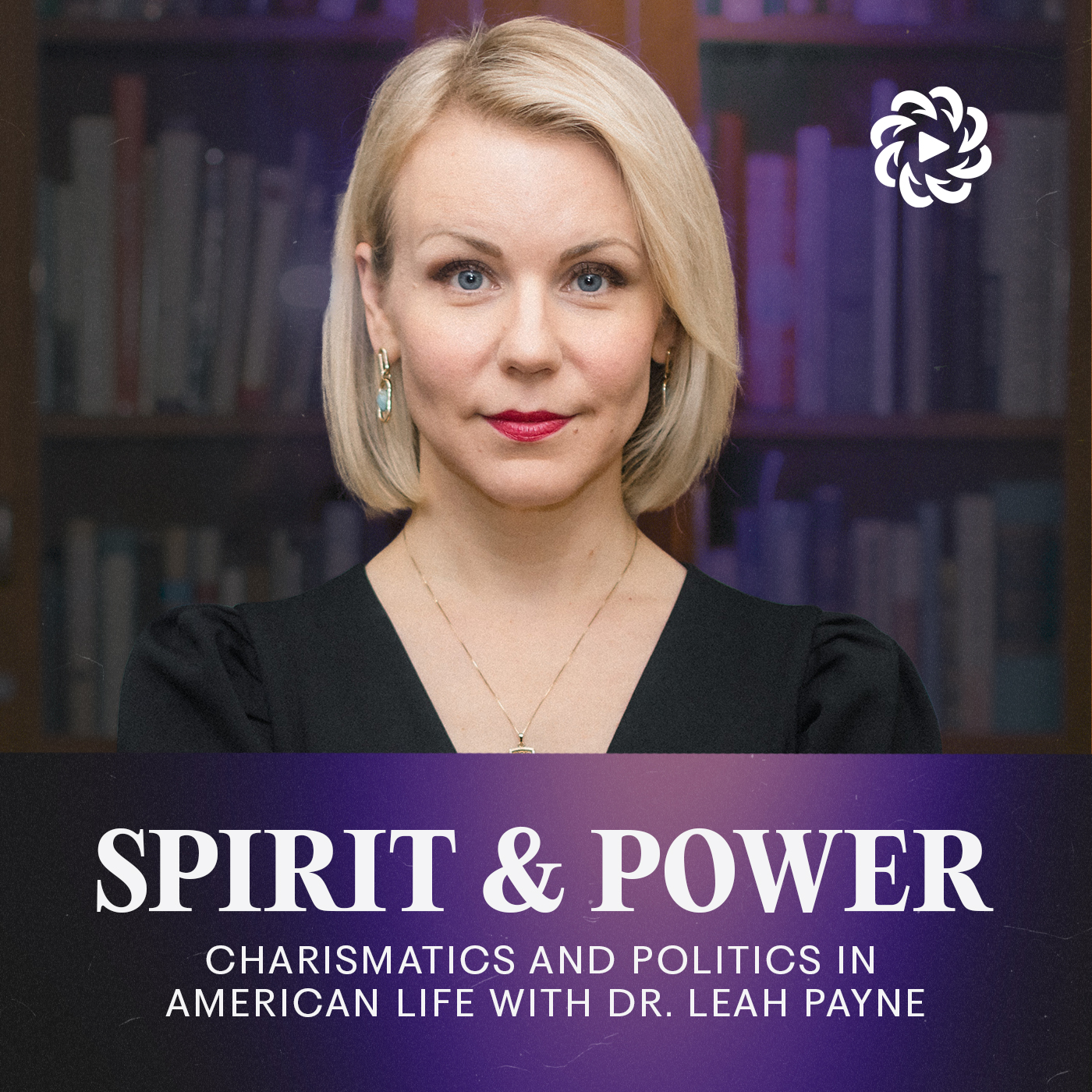
Leah: I'm Leah Payne, a historian and expert in Pentecostal and charismatic movements in the United States and beyond. Welcome to Spirit and Power, a limited series podcast funded by the Henry Luce Foundation, where we do deep dives into how charismatic and Pentecostal movements are shaping the American political and social landscape. This week, Higher Dimensions; How the city of Tulsa became an epicenter of charismatic and Pentecostal media making and Conservative Political Action.
Caleb Gayle: My name is Caleb Gayle, and I'm a professor at Northeastern University and a writer for the New York Times Magazine.
Leah: Caleb Galye is a respected journalist, and his writing has won too many awards to name here. He's an expert on the history of Oklahoma too. Check out his book, We Refuse to Forget: A True Story of Black Creeks, American Identity, and Power. It's stunning, but that's not really why I invited him on Spirit and Power, though.
Caleb: My current profession, or occupation, and maybe even some of my political leanings might not indicate that this is the case, but the charismatic movement really raised me from before I was even born. My family, especially my grandparents, were pretty serious devotees and radio listeners of Oral Roberts, back in the 40s and 50s in Jamaica. And named their very first son together, Oral Roberts Gayle.
Leah: Oral Roberts was a pioneering Pentecostal evangelist who transformed Tulsa in so many ways. We'll unpack a lot of those ways with Caleb Gayle as our guide. If you're wondering, naming your kid after Oral Roberts is serious, charismatic Christian cred. Before we get deep into Tulsa, here's a snapshot of what it was like for Caleb growing up in the Pentecostal movement.
Caleb: Sundays, of course, were sacrosanct in a way, probably, that would even beat out most other Christians. In part, because even though we were Pentecostal, we had long and church services, like really long church services, followed by more church services, and then we visited other people's church services...
Leah: But then was there, like, food in between?
Caleb: Always food, always lots of food. But then in the evenings, we have to watch Our Power. We'd have to watch Robert Schuller. We'd have to watch a little Falwell. We'd have to watch a little Roberts. Maybe some of the specials there were videotapes...
Media Clip (Oral Roberts): ...and the title of this message is The Blessing, not a blessing, but The Blessing, the blessing of God that encompasses your whole life and is continuous in your life and is never ending, not just a blessing now and then, but The Blessing that covers you and never leaves you.
Leah: As a kid, Caleb's parents took a leap of faith and moved from New York to Oklahoma. While most people moved to Tulsa to work in oil...
Caleb: My parents weren't in the oil and gas industry, never have been or will be. The thing that drew us, or at least the thing that made us feel like home, Jamaicans in a part of the Old West that hasn't really had a long history of Jamaicans, was because of Oral Roberts University. And our very first stop when we landed was to the Prayer Tower on Oral Roberts University's campus. So I attended another one of Oral Roberts' proteges' elementary schools, Victory Christian School, which is right across the street. I mean, we're very suffused with all things charismatic.
Leah: People might not realize that Tulsa, a city that's about as landlocked as you can get in the US, is actually an international hub when it comes to charismatic and Pentecostal communities. After it drew in young Caleb and his family in the 90s, they saw evidence of its international renown firsthand.
Caleb: When I became a teenager, I got really involved in activism in Tulsa, far distant from the more conservative assumptions that one might attach to the charismatic movement. And part of that was attending city council meetings at Tulsa City Council and raising hell. And in so doing, one of those times, before it was my turn to speak and raise hell at said city council meeting, I distinctly remember then-president of Oral Roberts University and head Oral Roberts ministries, his son Richard Roberts talking about a proclamation that was going to be issued for Oral Roberts that would recognize significantly the contribution that Oral Roberts University has made. They counted, and there were 5,500 people from outside of the United States who had called Tulsa home in some segment of time that Richard Roberts had mentioned. And that tracked so well; our church experience really reflected that, right? So we are very Jamaican, and we were in a place like New York, specifically in Brooklyn and the Bronx, like you can be in the most relatively diverse kind of place in the world perhaps, in New York you can be so surrounded by people who are just like you, right? So my grandfather's church: Caribbean versions of hymns, Caribbean versions of popular songs, a particular stylistic element that was very Caribbean.
Media Clip (Caribbean praise song): Jesus is the winner, man, the winner, man. Jesus is the winner, man, the winner, man, all the time. I am on the winning side, the winning side, the winning side. I am on the winning side, the winning side, all the time.
Caleb: And so we would see only really other Caribbean people. Those were the only black people I thought existed. And then we moved to Tulsa, of course, that changed my world. But upon us getting there, we met this couple named Gabriel and Joy Shodian, who were Nigerian, and they talked about this Caribbean pastor that they attended church in the far north. And everybody had been drawn there at some certain point over the past 40 or so years, or at least at that time, maybe 30 or so years, by Oral Roberts University or Rhema pastored by Kenneth Hagin.
Leah: Kenneth Hagin, often regarded as the father of the Word of Faith Movement, played a pivotal role in shaping Tulsa, Oklahoma into a global hub for charismatic Christianity. Through his ministry, Rhema Bible Training College, founded in the 70s, and extensive media outreach, Hagin popularized teachings on faith, healing and prosperity, influencing generations of Pentecostal and charismatic leaders. Because of the international influence of Hagin and Oral Roberts, Caleb's family found a church community where they felt like they belonged, even in the middle of Oklahoma.
Caleb: And so to some extent, like this incredibly international church in a part of America that I think most Americans think is really, really white, but people from truly all parts-- Fiji, Jamaica, Barbados, Nigeria, Haiti, Liberia. I mean, it was just this smorgasbord of cultural and racial groups in this church that was teeming with growth. The church was the living embodiment of the draw of the cares, not just from different parts of the United States, in fact, moreso from Angola to New Zealand. And it's not an exaggeration, because I can see those folks who would, on certain days, have their flags with them, touting in church services about the places from which we hailed.
Leah: When I tried to explain the charismatic and Pentecostal movement of the 90s, I always will say something along the lines of, 'you need to go into one of their mega churches in the kind of warehouse-y mega church, and you will see flags from every nation in the world in the ceiling of the warehouse.
Caleb: Most definitely. We went to Christ for the Nations and Dallas Youth for the Nations every summer for summer camp.
Leah: Christ for the Nations is a charismatic ministry based in Dallas, Texas, also founded in the 70s. The organization has trained thousands of leaders, including New Apostolic Reformation affiliated Dutch Sheets. Often intersecting with conservative political movements in the US and beyond the US. Caleb and the young people from his church in Tulsa were traveling around 260 miles south to Dallas to be trained to spread American Charismatic Christianity to the nations.
Caleb: As the title, "Christ for the Nations," would imply there was an imperative to globalize our mindset.
Media Clip (Praise song): Sing unto, Sing unto the ancient of days. None can compare, For none can compare to your matchless worth. Sing church, sing unto the ancient of days. Your kingdom shall reign over all the Earth. Sing unto the ancient of days. For none can compare to your…
Caleb: ...from the Bahamas, Neil Ellis, also from the Bahamas, who really got the opportunity to take off the International, or the global, was really critical to how we framed everything, every little bit of everything.
Leah: The multinational charismatics of Tulsa in the 1990s had a global imagination, cosmic really, but on the ground in the city of Tulsa, they occupied a specific place in space, which influenced how Tulsa grew into the hub that it is today.
Caleb: Tulsa is very neatly organized-ish, especially at that time, into quadrants, with Midtown in between, right? So Midtown was usually older, moneyed people. East Tulsa, lower income, white with a rising Hispanic community. South Tulsa was a growing mishmash, but the more south you went, the higher the income earners were. West Tulsa, again, lower income, white but also a smattering of black people. And then North Tulsa was considered, even provincially, like the blackest area. That was the home of the former Black Wall Street.
Leah: Black Wall Street was a thriving African American business district in Tulsa, Oklahoma. Centered in the Greenwood neighborhood, known for its economic prosperity in the early 20th century. I reached out to one scholar who knows about how the Pentecostals of Tulsa shaped the spiritual and racial geography of the city, especially when it came to Black Wall Street.
Daniel Isgrigg: My name is Daniel Isgrigg. I am a Pentecostal historian, Associate Professor at Oral Roberts University in the Graduate School of Theology. My expertise is in Pentecostal history and history of the Assemblies of God, and particularly Tulsa.
Leah: According to Daniel, white Pentecostals came to Tulsa in the early 1900s, right as Pentecostalism was emerging as a distinct form of American revivalism. Black Pentecostals arrived in Tulsa a little later. Their story is interwoven with the story of Black Wall Street.
Daniel: The first black Pentecostal group to come to Tulsa was around 1914, there's a small group of Church of God in Christ women who came to plant a church here in Tulsa. They weren't received very well, and they struggled for the first couple of years. Tulsa had a thriving black community. Black Wall Street, or the Greenwood district, was an all black community because of segregation, but is very wealthy. They have their own businesses. Had hotels, movie theaters, many, many businesses, and it was probably one of the most prosperous black communities in America in 1915 through 1920. So in 1917 Bishop C.H. Mason of the Church of God in Christ, sent a pastor, Travis B. Sipuel, to be the first lead pastor of the Church of God in Christ in that community. And he immediately found a building and started working recruiting individuals. And by 1920 he had somewhere around 100 to 150 congregants in the church at the time. The black community in Tulsa, in Greenwood, was thriving, and had about 10,000 people by this time. In 1921 there was an event that took place that changed all of that. The Tulsa Race Massacre was a terrible time in Tulsa's history, when a mob of white men accused a black man of assaulting a white woman. He was arrested, and there was a white mob that came to the courthouse trying to lynch this young man for his alleged assault, which was in an elevator in a hotel in downtown Tulsa. The charges were eventually dropped against him after everything took place. While the mob was gathering outside the courthouse, a group of black men from Greenwood came to try to defend him and try to keep the mob from lynching him. And that started a skirmish. Someone was shot, and this mob proceeded to go to the Greenwood area and to begin to loot and burn things to the ground. All the businesses that were there within these five or six square blocks right adjacent to the white part of town were burned to the ground; homes, businesses, many people were killed. 300 people were said to have died in the race massacre at the time.
Leah: According to Daniel, it's hard to overstate the long-term impact of the Tulsa Race Massacre on the city of Tulsa or on its spiritual geography.
Daniel: One amazing part of the story of the race massacre was the revival that took place afterwards. The Greenwood community rebuilt almost immediately. In fact, when Booker T. Washington made the comment that Tulsa was the quote Black Wall Street, he did so after the massacre, when he came here in the early 1930s and saw how prosperous the community was. So they rebuilt very quickly. The hotels were rebuilt, the shops return, the professionals and doctors and entertainment establishments were all rebuilt. This was also a time of revival for these churches. The COGIC church, Church of God in Christ, on Greenwood Avenue, it suffered the devastation, but it actually, according to city records, it grew from 140 to 250 people in 1922, just a year after the massacre. There were several other churches planted at the time as well. So there were literally several hundred black Pentecostals in this community that was somewhere around 10,000, probably much less than that after 1921. There were others who came and started churches. There's several Church of God in Christ by 1925; there's probably five or six in the area, in the surrounding areas, because of the flight of some black families into some of these other parts of Tulsa.
Leah: I asked Daniel how white Pentecostals interpreted these events. Their response was silence.
Daniel: There's really no information. There were several white Pentecostal churches that were nearby the area. We don't know if they participated. We certainly know they did not come to the rescue. There's no information in any white Pentecostal publications about the event. Even though the white Pentecostal church that was, Assemblies of God, in 1921 it was one of the largest in the US at the time, Fifth and Peoria, Full Gospel Tabernacle. And so there's really no information in any of the papers on anything that happened in Tulsa. In many ways, the white community was very disconnected and not connected at all to what was taking place in the black community. Tulsa essentially has two Pentecostal communities, one white and one black. Even now, a hundred years after the race massacre, those two communities rarely mix. That's the legacy of this town. It's the legacy of the race massacre. It's why that story is important. It's the white flight of churches out of areas that grow diverse in Tulsa as a consistent theme.
Leah: Caleb notes that in the 1990s those long standing racial, social and political divides shaped how the multinational charismatics were perceived.
Caleb: I think there's also the assumption, especially with those in that midtown area, right? Well, you know, middle to upper middle, upper middle income to upper income, predominantly white people who perceived those mega church charismatics, or even not non mega church charismatics, as duly concerned with not the here and now, right? They were too, kind of, swept up in the miracle signs and wonders such that they couldn't be involved. As my grandmother would put it, they were so heavenly minded that they meant no earthly good. And I think that was the assumption, whereas, if you were a political leader and you were going primarily say, to North Tulsa, where there were established, historic black churches that kind of resisted the urge of some of those charismatic church and actually kind of, I would say, despised some of them, in part, because they pulled a ton of their members away, right? Because they had the resources financially to bus people in. They had the glitzy screens. They had a more active and engaged kind of church experience, right? The actual moments of church had the feelings and the esthetics of a concert, as opposed to as a lot of, perhaps maybe, your Baptist listeners, or black Baptist listeners might. Remember they didn't have an hour of devotional-- which were older black deacons sitting at the front of the church, just kind of hemming and hawing before service got started. So it felt professionalized. It felt of the moment. The music sounded more current. It wasn't wrapped up in hymns. You could hear a Jackie Velasquez...
Media Clip (Jackie Velasquez song): Un Lugar Celestial "Un lugar celestial, Nuestro cielo pequeñito Sobrenatural, Un lugar celestial, Justo lo que necesito"
Caleb: ...you could see her at a concert at the churches that were arrayed and bringing some of these talents to town. And you could always count on DC Talk or the Newsboys, or John Rubin or something in between, or Kirk Franklin.
Media Clip (Kirk Franklin song): Stomp "I can't explain it, I can't obtain it, Jesus your love is so, it's so amazing, it gets me high, up to the sky, hallelujah, and when I think about your goodness, it makes me want to stomp, you can't take my joy, devil"
Caleb: The people bringing them to town were not these staid, older, stately institutional figures.
Leah: The flashy end-times-oriented charismatics were off putting to more established churches in Tulsa, both black and white.
Caleb: So I think there was a significant amount of resentment that a lot of older black pastors of Morningstar Baptist Church or Antioch Baptist Church cultivated when they saw the catalytic and extreme growth and excitement that any of these large, massive, mega churches were having and experiencing. There was a certain assumption, especially amongst that midtown set, that there was a certain level of anti-intellectualism that was attached to the charismatic movement that then made it less appealing, right? Because are you going to ask for someone to vote through a package to put water in the river? (These are literal things that were debated in Oklahoma at that time) Or were you going to go to them to do that or are they so heavenly minded that there are no earthly goods such that they couldn't engage on that front? And I think that that was only ticked up and even more intensely with the advent of Y2K and you have people like Kenneth Hagin predicting that the world was going to end. Or some of Kathryn Kuhlman, who also spent time in Tulsa, or Roberts and others, who were alleging that certain catastrophes that started to occur-- whether it was Hurricane Katrina or otherwise-- were the result of almost Gomorrah and Sodom like activities that they assume were happening in these places. So I think there was an anti-intellectualism attached to them. There was additionally the assumption they were so heavenly minded they were no earthly good, and they were seen as detached from this real world and real world-active, kind of, horizontal relationships, and overly obsessed with this vertical relationship with a God they could not see.
Leah: So how did these heavenly minded charismatics in Tulsa end up bridging so many divides, and how did they become major players in American conservatism today? One man, another transplant to Tulsa, became an important bridge in the city of Tulsa and in the Pentecostal and charismatic mediaverse. Here's Caleb Galye on Carlton Pearson, a key figure in the Tulsa religious landscape and on the global Pentecostal and charismatic scene.
Caleb: Carlton Pearson was originally from the San Diego area, from California, made his way kind of somewhat similarly to me, right? His mother would see people like Oral Roberts and others on the television, and would send money, right? Send that seed faith. And can recall even people like Oral Roberts sending the Oral Roberts singers to places like San Diego. He remembers sitting in Assemblies of God church in San Diego, listening to it and feeling, even in that moment, he was supposed to go to Oral Roberts University, even though it was, you know, it was still under construction in both a figurative and literal way-- more literal than figurative, to be honest. And upon getting there, he mentioned, with his large afro, which was unintentional, because he hadn't found a barber in Tulsa yet, he remembers all of the students, because it was small enough at that time for us to be the case. Would line up and they would shake hands with the founder, the namesake of Oral Roberts University, Oral Roberts himself. And the very first question that Oral Roberts asked him, according to Carlton Pearson-- I think this is really illustrative of kind of the the launch of Carlton Pearson as this larger than life figure-- the very first question that he asked this young black man, one of very few black people at this university at this time, is, 'Son, do you sing?' And it was a really critical question, because Carlton answered in the affirmative, though shyly, and in so doing, that, almost immediately, platformed him as not so much the heir apparent, because Oral Roberts had a son-- still has a son, Richard Roberts-- who Carlton would admit was nowhere near as talented, nowhere near as affable, nowhere near as gifted, nowhere near the kind of visionary thinker that Carlton was. And almost immediately, Carlton found that he was having to take time off from school because he was flying on the ministry jet to go to places he was being featured on TBN.
Media Clip (Carlton Pearson Singing): I'm Blessed "I'm blessed. Just look and see what God has done for me, and He's opened doors for me I could not see. I'm blessed. And I don't serve him like I should. I'm blessed. And I know I don't deserve all of this good."
Caleb: His star was rising in a very literal sense, and very soon thereafter, graduating, ended up founding something called Higher Dimensions Church.
Leah: When it came to choosing the location for Higher Dimensions in Tulsa, Pearson made a deliberate geographical decision.
Caleb: He strategically decided he did not want to locate his church in North Tulsa, right? Where it has the highest concentration of black people in any major city in Oklahoma. He decided he wanted to do it in South Tulsa. And that church became, I mean, massive. That was the very first church we visited upon getting to Tulsa, because we had heard of Azusa. We had watched Azusa.
Leah: Carlton Pearson's Azusa Conference was a groundbreaking annual revival that emerged in the late 80s and peaked in the 1990s, drawing thousands of worshipers and influential gospel artists to Tulsa. Inspired by the early 20th century Azusa Street Revival in Pearson's home state of California, Pearson sought to create a space for vibrant, Pentecostal worship and dynamic preaching, attracting leaders across denominational lines. The conference also became a hub for gospel music, launching the careers of many artists and featuring powerful sermons that resonated within the charismatic movement.
Caleb: We knew who T.D. Jakes was because of Azusa. And to put it very plainly, part of Carlton's ascent was when Oral Roberts-- and I mean, for those of your listeners who might not understand this language, I'm more than happy to explain-- felt a quickening in his spirit before a taping of a show, and they weren't even dressed yet. They didn't have their suits and ties on, but he announced to the viewing audience that, you know, this is my black son. And not only is he my black son, you know, I need to better engage this population, which is not just white. And so to some extent, those kind of, the confluence of those things, the additional fact that Carlton grew up as a member, a very devoted member, of the Church of God in Christ denomination, and the fact that he was from California, made zeroing in on the Azusa Revival of the early 1900s, that really kind of gave birth and life to the Church of God in Christ, that really breathed a renewed breath of life of the charismatic movement into black church congregations. He felt as if he was the heir apparent to host it. And it was a four day conference that was held every year, starting initially inside of his church, but blew up and got too large, such that it had to be held in the Mabee Center, which could host thousands upon thousands of people. And if you did not get there, I can say this personally, because we did not get there always early, you were screwed. You were not-- you were going to have to be in the overflow. And if you didn't get there really early, not only would you not get into the main building, you wouldn't get into the overflow, so you would just have to wait at home. This is before streaming! The fourth night of that conference was always held very close to the vest. No one knew who would be preaching, and it was usually Carlton's way of introducing, to not just charismatics, but kind of to the market-- and I think that's a really important distinction-- introducing to the market a new player, right? Sometimes it was Myles Munroe, who we then became familiar with. Sometimes it was Neil Ellis. Sometimes it was T.D. Jakes, a lay minister whose primary job, up until that point, was a janitor. Or Joyce Meyer, who had a radio show with an anemic listening audience.
Media Clip (Azusa Conference Joyce Meyer): You need to do it now, or this opportunity is not going to pass you by again. God's calling for us to be responsible, to hear what he's saying and to do what he's saying when he says to do it.
Media Clip (Azusa Conference T.D. Jakes): I believe with all of my heart that nothing that happens surprises God, and that it does not surprise people who are in tune with God.
Caleb: And the argument that Carlton would replay for me, that he gave to them all those years ago, some 30 years ago, nearly, was this: I promise you, we can sell so many more CDs. And then he would say, you know, Joyce and T.D. weren't even into the tapes and videotapes and the CDs. And my guys would edit it and make it nice and they could push those CDs. And Carlton, to some extent, was a man ahead of his time and a brilliant business mind, because that's exactly what it did. It platformed a lot of these people.
Leah: In addition to being a savvy marketer, a bridge builder and a charismatic and Pentecostal tastemaker. Pearson was an...
Caleb: ...outspokenly conservative person who advised George W Bush, who ran for mayor of Tulsa, Oklahoma as a Republican, who held pretty conservative views.
Leah: What makes Pearson a truly fascinating and remarkable figure, however, is that when he was at the height of his political and televangelist powers, he began reconsidering a core component in his Pentecostal faith.
Caleb: Starting in the early 90s, Carleton became really concerned because, as he said, he didn't feel comfortable with a God, praising a God, worshiping a God, who would create a customized torture chamber called hell that he would doom the majority of the Earth's population to.
Carlton Pearson: Yeah, well, I also preach scriptures. I've evolved from that principle. I don't think you can ever be separated from God eternally, because God is omnipresent. His mercy endures forever. You cannot really be no more separated from God than you can from air. You just may change form.
Caleb: And so later on, in the early 2000s he made that confession, first to his internal ministerial group and leadership group, subsequently to his church massive letting of members that went from a church of over five to 6,000 people attending every week-- which is very different, for those of you who don't know, than the actual total number. Every pastor can say, 'Oh yeah, I have thousands and thousands.' But those who actually attended went from 5,000 to about 200 and he really kind of tried to endeavor to articulate a vision of a much more inclusive gospel.
Leah: Pearson's convictions had social and theological implications.
Caleb: The church that he would end up becoming a guest preacher at, All Souls Unitarian Church, which is the largest Unitarian, Universalist church in the world, in Tulsa, Oklahoma, was a church he would routinely pray against. He would drive by explicitly in his pre-inclusive gospel days, to lambast even internally, simply because he felt as if they were too progressive and too liberal and too inclusive and too accepting.
Leah: There's a This American Life episode about him in a movie, although I have to say-- I'm sure, I bet you'd agree with me-- the movie does not do justice to either Oral Roberts or Carlton Pearson. Their charisma is so off the charts. So if you know, for people who listen, who have only seen the movie, you have to see the real deals in action, even though those actors are great. But yeah, there's, there's something about when you see televangelists actually like doing their craft. You know, you see something else. I love the way you described it, because it's a development network, almost like a research and development kind of lab, maybe to, like, bring out, you know, new products, preaching products to listeners, complete with, you know, souvenirs and merch and and all of that. Like Pearson, Caleb eventually began to critically engage with the charismatic world that raised him.
Caleb: I was going to Victory Christian School, was in junior high and I distinctly remember-- one caveat is I would say that the one thing I've always found really interesting about kind of the charismatic movement is that there is both, kind of a balance between freedom or liberty and compulsion. So I like the idea, theoretically, that a service can go where a service can go, you never know where it's gonna end up. Don't know where it's starting. Don't know when it's ending. That's true. You don't know who might cry out. You don't know who might receive, perhaps, that insight that they were looking for, that quote, unquote, miracle that they were looking for. And I think like that, it cultivates this expectant heart, right, which I've always found intriguing, right? And so for me, what I distinctly remember as a junior high school student was that my antennas were perked up because at Victory Christian school, we would go through a few things in the morning. First, the principal would kind of beam through the PA system, and he would walk us through a principle, right? He would walk us through a variety of things-- Pledge of Allegiance, a morning prayer, a pledge allegiance to the Bible, pledges to the Christian flag, which my editors, when I was writing a story a while ago about the Christian father, were like Christian flag? eah, I was like, oh boy, do I have some stuff for you. So for me, it's been, I think, quite the journey. In part because I, as I've told my editors, I really, really don't always like writing about faith. In part because, as Viet ThanhNguyen-- one of my favorite novelists and memoirists-- says, "If you're going to write about yourself, one must first go there and go fully there."
Leah: One of my favorite historians of Pentecostalism, Arlene Sanchez-Walsh, wrote this about Pentecostalism: "Pentecostals tell great stories." And it strikes me as in keeping with your heritage that you're now a storyteller, and maybe it's not in the same kind of way, but I wonder if you got some of that instinct for how to tell stories from the charismatic and Pentecostal community.
Caleb: Definitely. I mean, like you, I think especially because it's not like confirmation, right, like at an Episcopal Church or an Anglican church or a Catholic church. I think those tools are really useful to write in memoir style about your attestation to a set of principles that you think you're going to live your life by. You don't get that chance at Pentecostal churches, right? Like you just, you know, the mic is in your hand. I know that if I go to visit my parents' Brooklyn church, Calvary Missionary Assembly in Brooklyn, New York, in Brownsville, that I will not like, I will not be able to leave said service without having to address the congregation and that congregation-- I think the funny thing is, and I think this is also like an element that one sees in a lot of black churches as well, especially the ones that hew a little bit more charismatic than they do otherwise-- like they also expect a certain level of entertainment, right? Like they don't... It's not just as if you can say 'Hi, my name is Caleb. My parents went here for church. Goodbye.' I have to present the Word, I have to break open the Word, I have to talk about how I met my wife. And it all has to feel like a cohesive narrative that people are coming for. That's why, I think that's why I said, like, the thing that I appreciate most about that upbringing is that you could come to people with an expectant heart, right? And I think even for my classes as a teacher I'm assuming my students are coming with an expectant heart and mind and set of ears. And I think perhaps that's why they're always shocked when I engage them, or shocked when there's some element of call and response in there without preparation, right? But I think that's like the storytelling.
Leah: How much time do you get to spend in Tulsa these days, and have you noticed anything different?
Caleb: The quickest way is to say that Tulsa has really changed a lot. Tulsa has changed because society has lifted up certain questions that I think are deeply needed in terms of answering. So, you know, growing up in Tulsa, I mean, so many people who looked like us, who lived in the same neighborhoods in North Tulsa just had no clue that this was, at once, at point, of the most prosperous parts of the country for black people, in terms of Greenwood and Tulsa's Black Wall Street. From the charismatic perspective, as spiritual and above it all, as you might want to be, you have to reckon with, all of a sudden, your congregants becoming ever more aware of these sorts of facts. I think also Tulsa-- I think part of what attracts people to Tulsa, to kind of bring it full circle, is that Oklahoma writ large, from the genesis of its existence as a state in the union, from its transition from a territory into a state, has always been presented as an opportunity to begin again. No matter who was already there, oftentimes that meant trampling upon, you know, at minimum, the five tribes. But in addition-- the Cherokee, Choctaw, Chickasaw, Muscogee Creek and Seminole-- but additionally, the Sac and Fox and other nations that had made their lives there, in part because they were expelled there by Jackson, one of our worst presidents in history. But it was presented in the late 1800s early 1900s as a place to begin again, as a place to completely try again. That it was made 'no man's land' in certain portions, literally called no man's land, or public lands, to be sold off or provided to anyone who could stake a claim and till it and grow it and maintain it for five years it was there. So the notion of beginning again is very, very fresh, that we are a state made of outsiders, despite the fact that there have been people there for so very long. And so likewise, when you see kind of an ushering in of a lot of people from around the world who came to this place that was flat and not cosmopolitan, and whose grass, by and large, is brown, to come to this place that felt completely void of any sort of temptation, which is what appealed to my parents, right? The New York they left is not the New York that's there now, right? If they had known, they probably would have bought property there. Oklahoma was provided as, 'Oh, this new place. There are places you can build homes, you can have a yard. It's new. It's an opportunity for us to launch something again.' And so likewise, now-- especially over the past decade-- Tulsa is really engaged on doubling down. Not on the cultivation of talent and people there already, but really doubling down on things like Tulsa Remote, that has attracted thousands of people from outside of Oklahoma. Dangling the carrot of $10,000 or a down payment on a home-- which, of course, has risen property values, but also priced out a lot of people again in the effort to present Oklahoma as an opportunity for you to to begin again. In so doing, the Tulsa that I knew is far more, I think, like if I was speaking like my parents or some of their church members, far more secularized, right? Far less, far less adherent to the norms that we normally think about for middle America. Where a First Friday, where all the art studios in downtown and the Brady District are opened up, and bars are flowing, and it's possible you might see some LGBTQIA flags, which for people such as myself who live in Boston, is like another day. But for a lot of people, it's a sign that Tulsa is becoming a lot more like all the places we left to make their home. And I think in that way, it's unsettling for some. It's great for the economy, right? Great opportunities. Businesses are starting. There's life in parts of the downtown landscape that, admittedly, when I was younger, we weren't even tempted to go into because they were abandoned warehouses. But I would say, from my perspective, Tulsa is yet again experimenting and hawking its wares as a place to begin again. And what place will the charismatic movement really have in that? I think people like Michael Todd and Transformation Church are trying to answer that question by growing bigger, by giving out millions of dollars to other struggling churches that they've probably helped and ushered along in the struggle of because they've pulled so many people away from by styling themselves as kind of 'in the world, but not of it' right? Even though a lot of people would argue that they are 'of it' right? Because they... their pastor might wear shorts at church, or he might have cornrows, or the music might sound different, or they might during worship service or during the collection of offerings, you hear secular music. So to some extent, I think that, like Tulsa is again toying with this question of beginning again, which I think is kind of part of the tableau of much of the Old West in their fight to stay alive. What role the charismatic movement plays in that, I think is... I don't really think that... I don't have an answer for that.
Leah: One thing that comes to mind is I'm interpreting the way you laid that out, so beautifully, I'm interpreting somebody like Clay Clark, a Tulsa based consultant, an entrepreneur, a former student at Oral Roberts University who has gained prominence in the right wing, charismatic and Pentecostal political scene. He organized the Reawaken Tour, this movement that really blends charismatic faith and conservative politics and conspiracy driven narratives and has attracted people like Mike Flynn and Eric Trump, and he often featured prophetic rhetoric linking spiritual revival with political activism. And it really echoes broader trends in the global charismatic movement, where nationalism and spiritual warfare and apocalyptic themes can shape political engagement. And Clark's influence reflects this growing intersection of charismatic Christianity within right wing movements in the US and beyond. And the Reawaken Tours were just a part of a series of business ventures. You know, he starts as a DJ. He has all these other kinds of businesses, and now I'm thinking he makes so much sense as part of that 'begin again culture,' that reinvention culture in Tulsa. So what's next for Tulsa, as this hub of American charismatic Christianity? Perhaps another reawakening, another Higher Dimension, another charismatic media maker ready to make a mark on a city that's always ready to begin again. For more from Caleb Gayle and Daniel Isgrigg, see our show notes, along with links to scholarly resources on major figures and big ideas we've covered today. And you can find me at DrLeahpayne.com and on most social media platforms as DrLeahPayne. That's it for this season of Spirit and Power. Thanks for listening. Before I sign off, I wanted to take a moment to invite you to a two day conference. It's a live action, deep dive into how music is shaping global Pentecostal and charismatic Christianities, and in the process, shaping faith, politics and society around the world. Please join me and many others in Atlanta, Georgia. Decatur actually May 21 through the 23rd at the 2025 Summer Institute for Global Charismatic and Pentecostal Studies at Candler School of Theology. This year it's Songs of the Spirit, Music and the Making of Global Pentecostalism. It's free to register. It's in partnership with Candlers La Mesa Academy for Theological Study, and we've got a special emphasis on Latin American and North American music networks. I'll put the registration link in the show notes, and I hope to see you there. That's all for this episode and this season of Spirit and Power. Thank you so much for listening. I'm Leah Payne. Spirit and Power was created by me, Dr Leah Payne, in conjunction with the Institute for Religion, Media and Civic Engagement and Axis Mundi Media. Spirit and Power was produced by Andrew Gill and engineered by Scott Okamoto. Kari Onishi provided production assistance. Spirit and Power was made possible through generous funding from the Henry Luce Foundation.
Straight White American Jesus
The flagship show examining Christian nationalism and democracy.
Listen Now
Axis Mundi Daily Brief
Short, focused analyses of the most important daily developments in religion and politics.
Listen Now